Ternary complex formation
The linker controls whether both ligands can engage at the same time without severe steric clash or wasted conformational freedom.
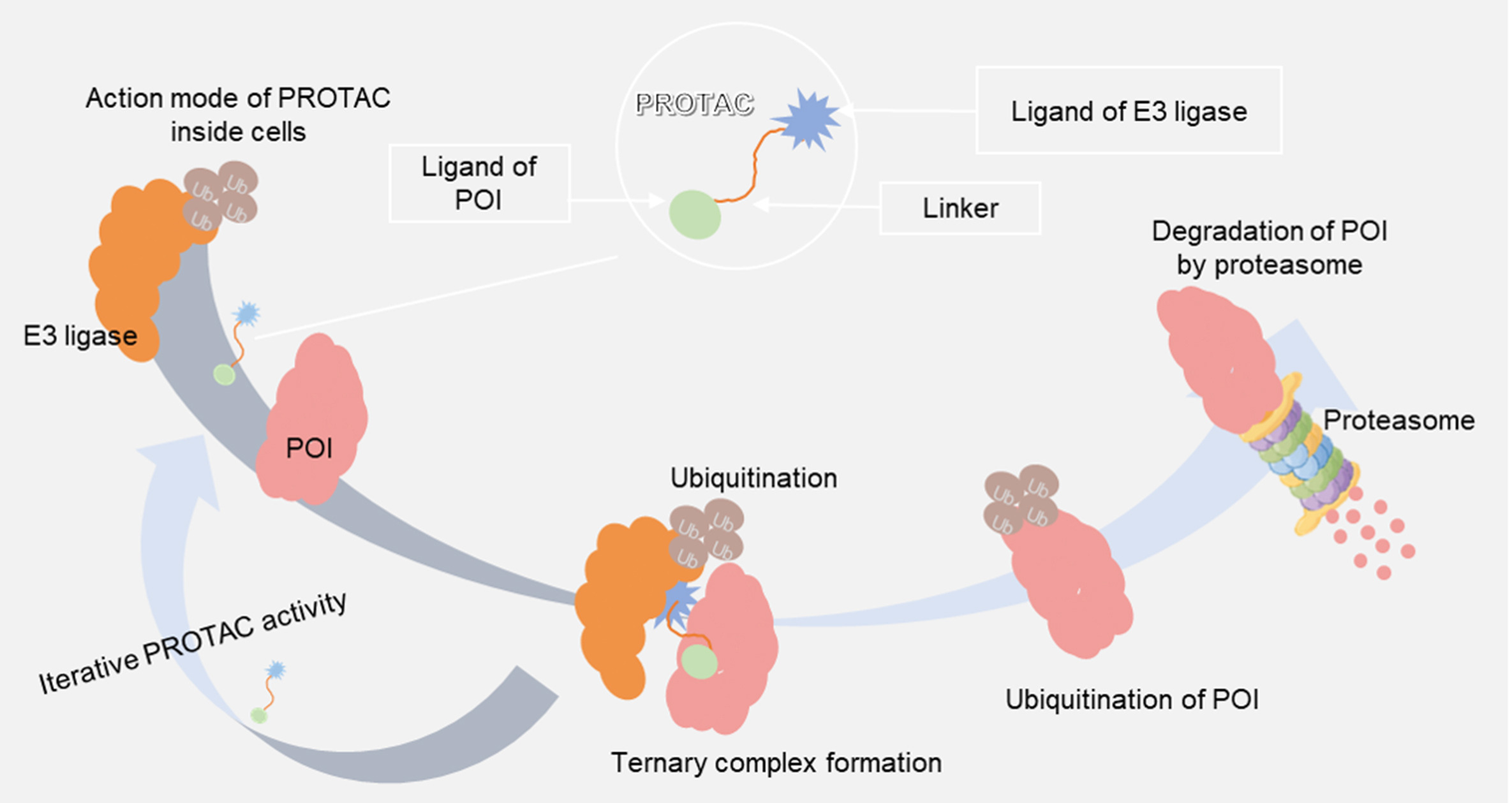
In a PROTAC, the linker is not a passive spacer. It helps determine whether the protein of interest and the recruited E3 ligase can adopt a productive ternary complex with the right distance, orientation, and physicochemical balance for degradation.
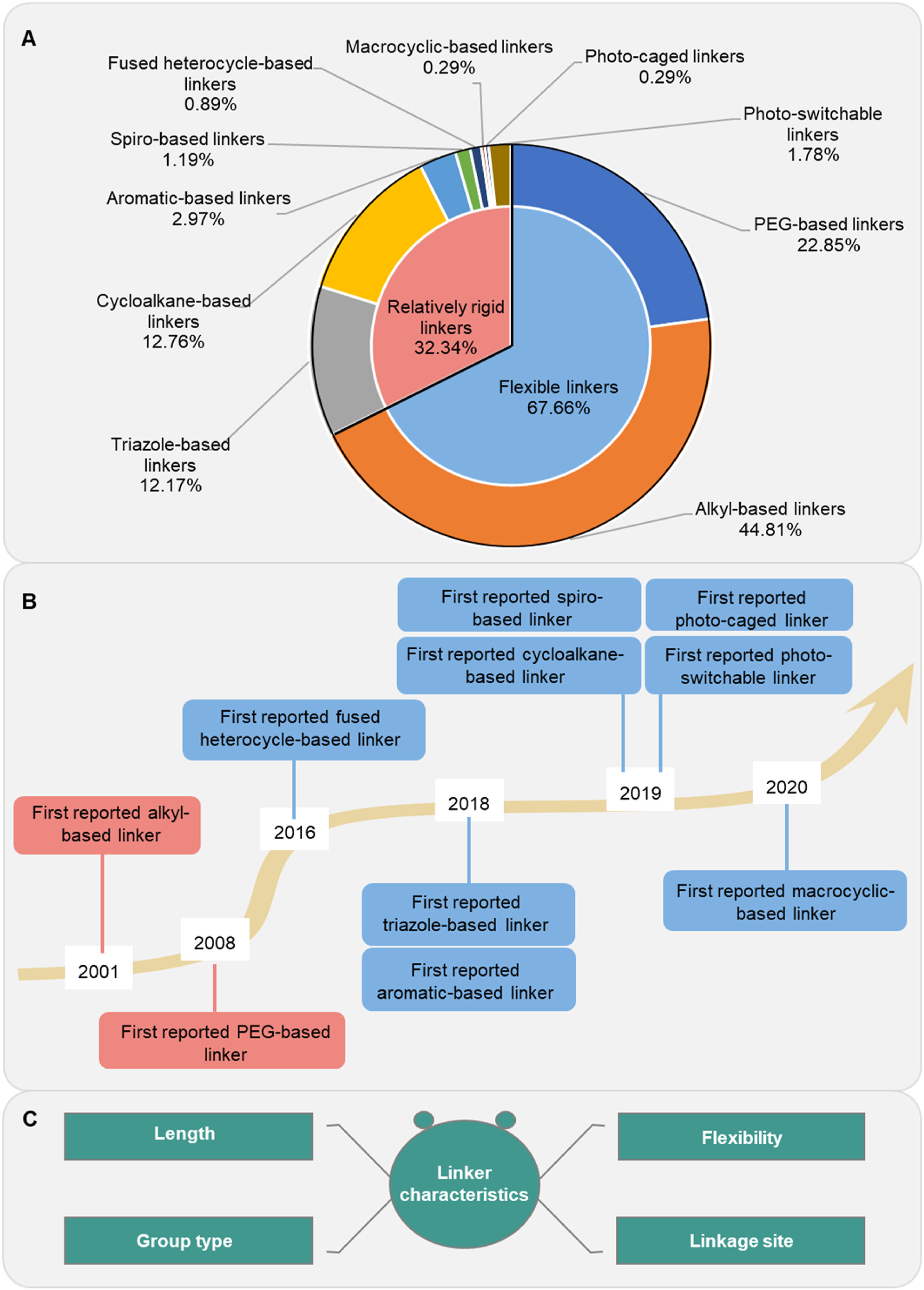
This page helps you decide which linker features to test first before moving into PROTAC Builder, modeling, or synthesis: length, group type, flexibility versus rigidity, and the attachment vectors on both ligands.
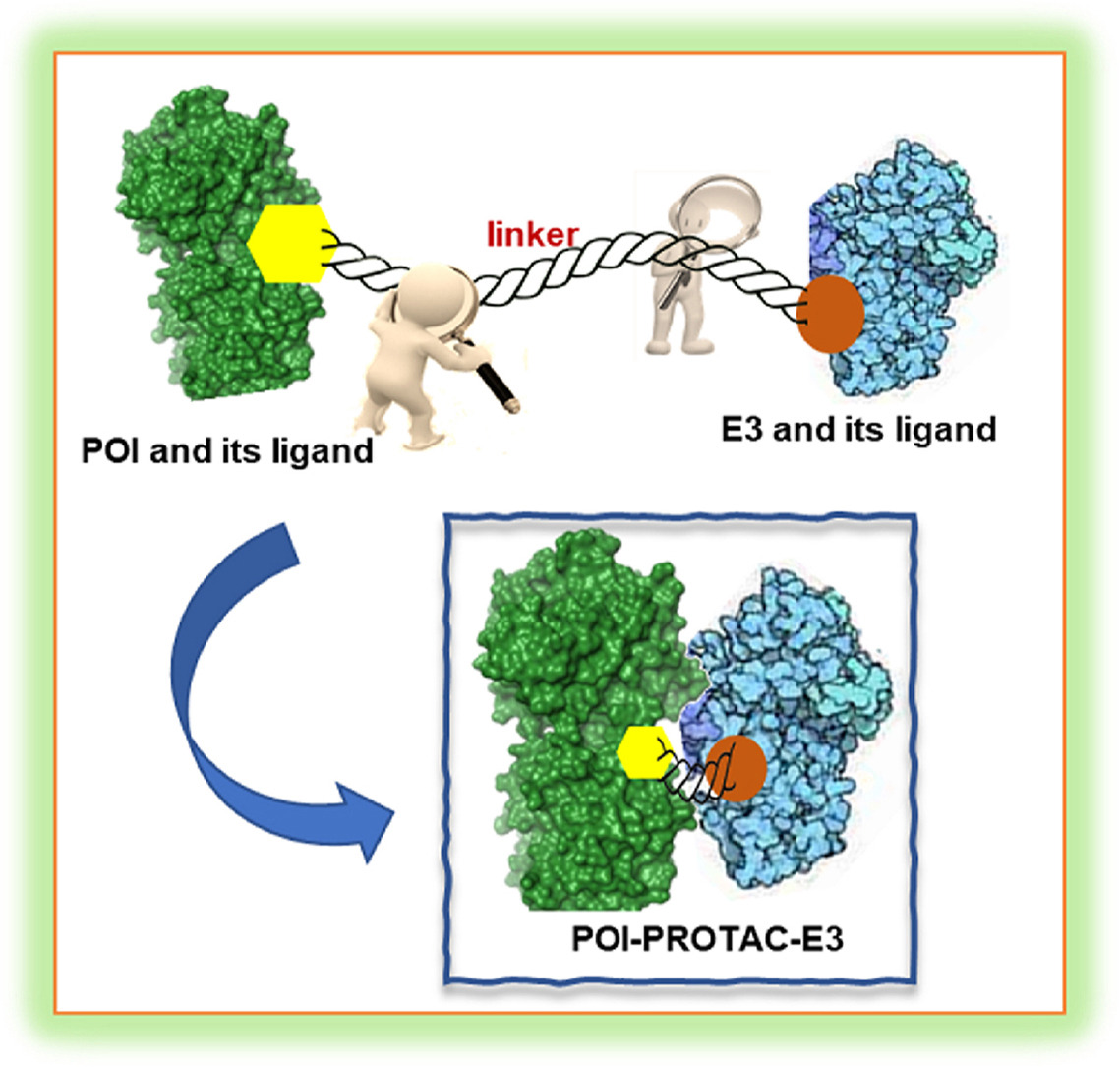
The linker controls whether both ligands can engage at the same time without severe steric clash or wasted conformational freedom.
Even when both ends bind, the POI must still be presented to the recruited E3 in a geometry that supports ubiquitination.
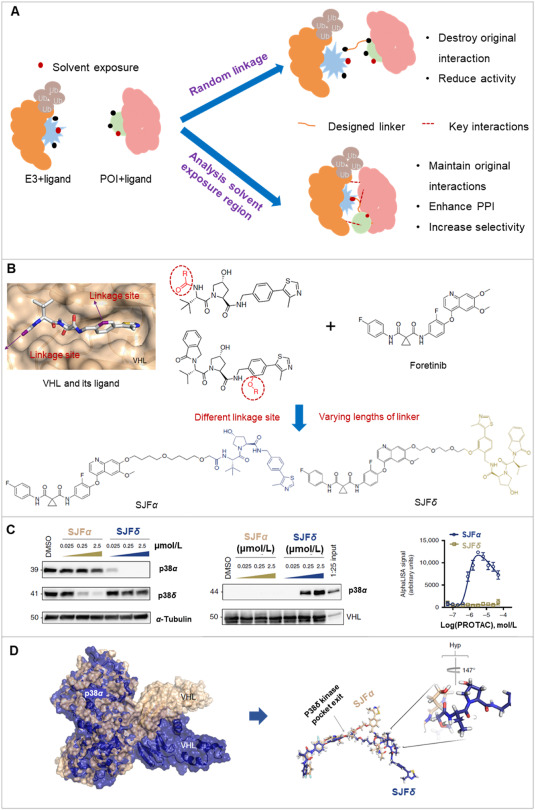
Changing the linker or exit vector can alter protein-protein contacts and shift degradation selectivity across related targets or isoforms.
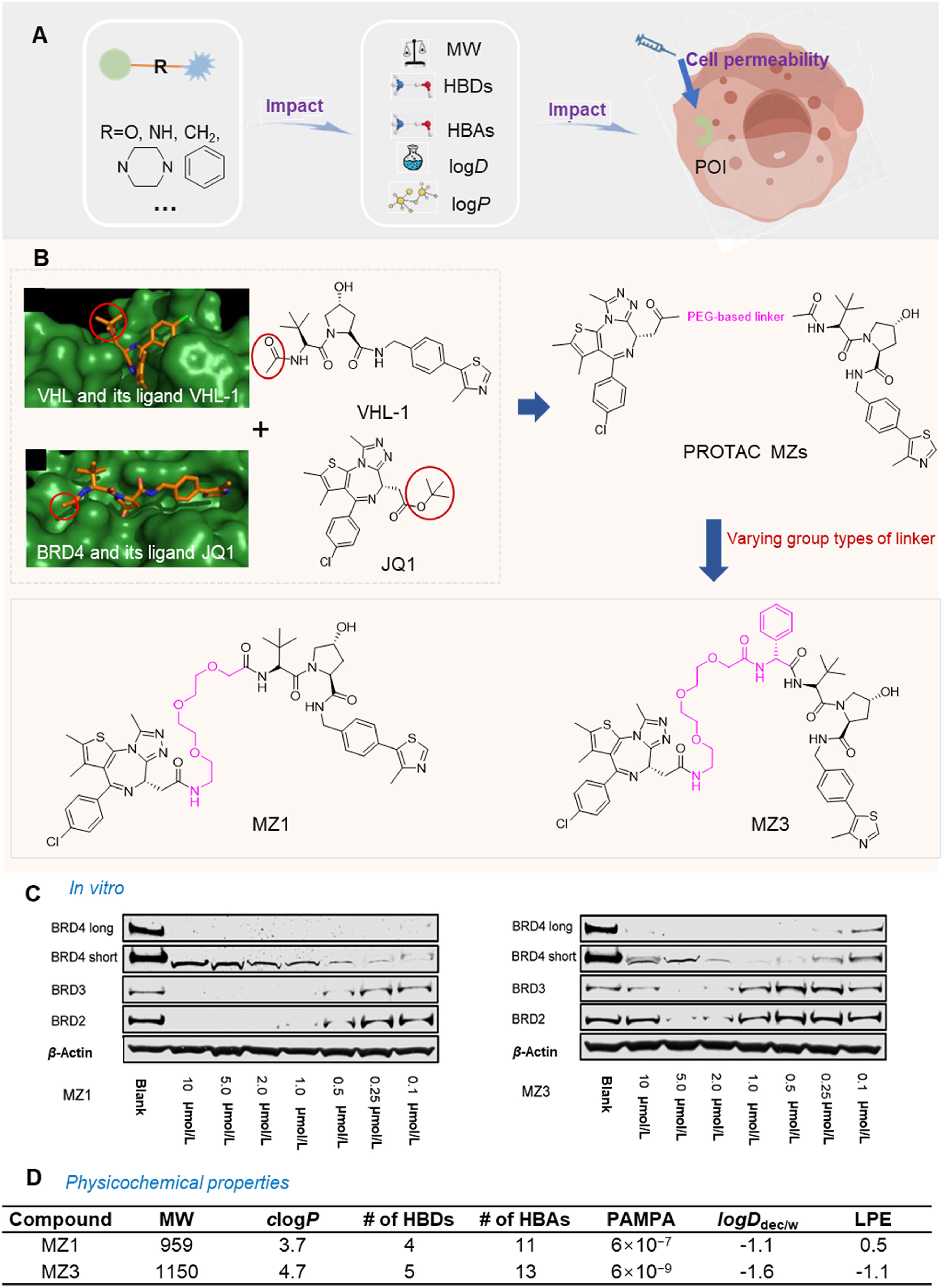
Linker chemistry changes molecular weight, polarity, H-bond burden, and lipophilicity, which can strongly affect cell entry.
Flexible, polar, or oxidation-prone motifs may help in one area while hurting oral exposure, microsomal stability, or clearance.
A good linker is not only biologically plausible. It should also be synthetically reachable for iterative SAR.
Does the linker give enough reach to bridge the POI ligand and E3 recruiter without introducing excessive entropy or floppiness?
Does the chemistry add helpful solubility or shape, or does it overburden the molecule with molecular weight, HBD/HBA count, or metabolic liability?
Should the system sample many conformations, or should the linker pre-organize the ligands into a narrower geometry space?
Are you exiting from solvent-exposed positions that preserve ligand binding while orienting the E3 recruiter productively?
Flexible linkers are often the first place to start because they are easy to enumerate and can reveal whether a POI/E3 pair has enough geometric tolerance to support degradation.
Benefits: synthetically accessible, easy to length-tune, broadly useful for first-pass SAR, and often stable under physiological conditions.
Cautions: can increase hydrophobicity, reduce aqueous solubility, raise oxidative metabolism risk, and become too floppy when extended.
Benefits: hydrophilic spacing units that can improve solubility and allow productive conformational sampling.
Cautions: may raise molecular weight, HBA/HBD burden, and polarity, reduce permeability, and introduce metabolic liabilities in some settings.
Benefits: accessible by click chemistry, often chemically stable, and useful when you want a more defined linker geometry.
Cautions: a clean synthetic route does not guarantee the triazole geometry matches the productive ternary interface.
Benefits: can add conformational control, improve solubility tuning, preserve geometry, and sometimes support better metabolic behavior.
Cautions: if the exit vectors are wrong, these motifs can overconstrain the system and block productive engagement.
Benefits: stronger shape control, reduced entropic wandering, and in some cases helpful stacking or interface interactions.
Cautions: higher synthesis complexity, possible permeability penalties, and strong context dependence across target classes.
Benefits: enable conditional or spatiotemporal control over degrader behavior.
Cautions: specialized tools rather than default discovery choices; they add light-delivery and validation complexity.
Linker length is one of the clearest failure points in PROTAC design. Too short can prevent both ligands from engaging or create steric clash. Too long can increase conformational entropy and reduce the population of productive ternary states.
A 5 to 15 atom exploration window can be a practical starting point when there is no stronger structural hypothesis, but it is not a universal rule. The right answer depends on POI surface topology, E3 orientation, and attachment-vector geometry.
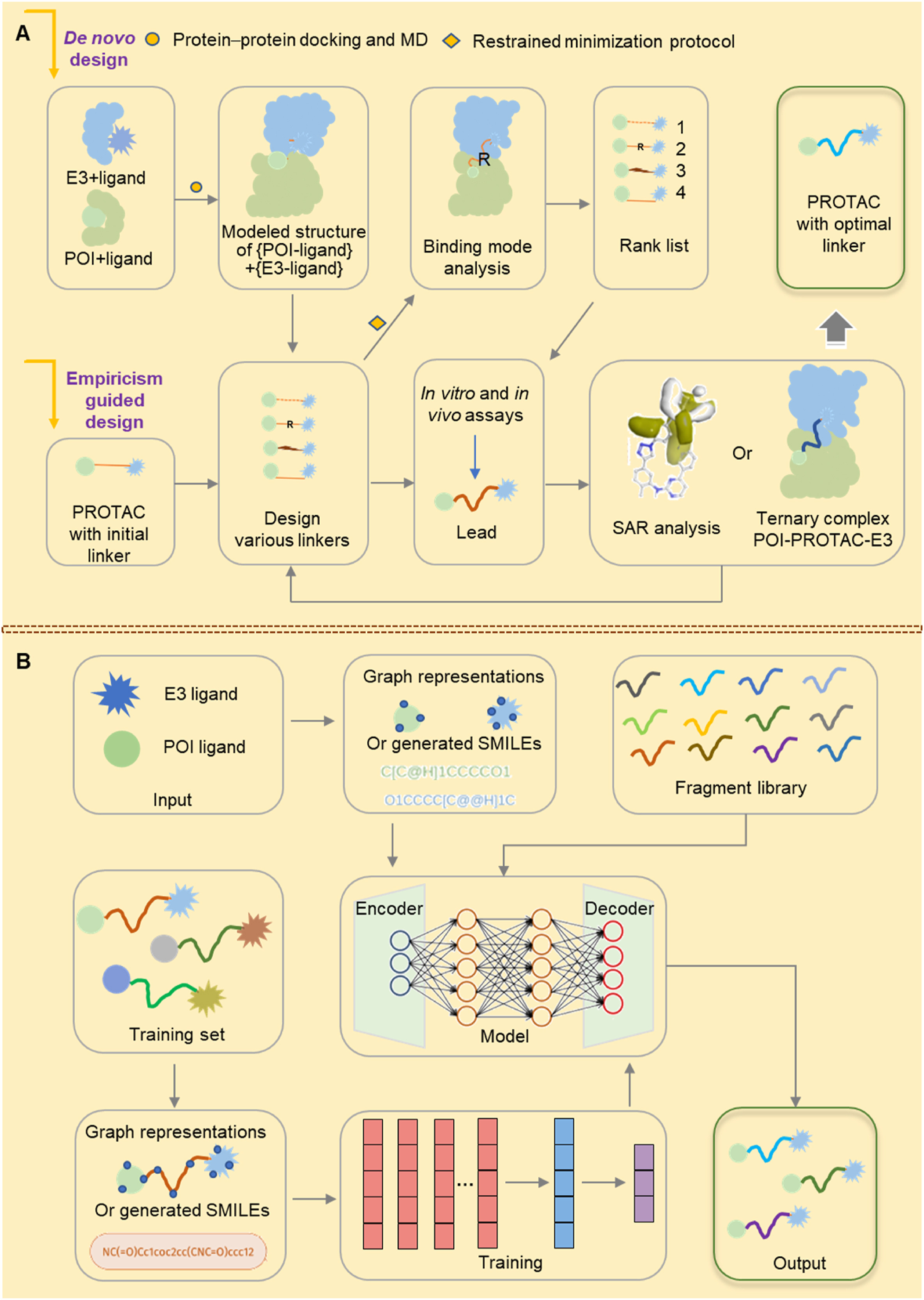
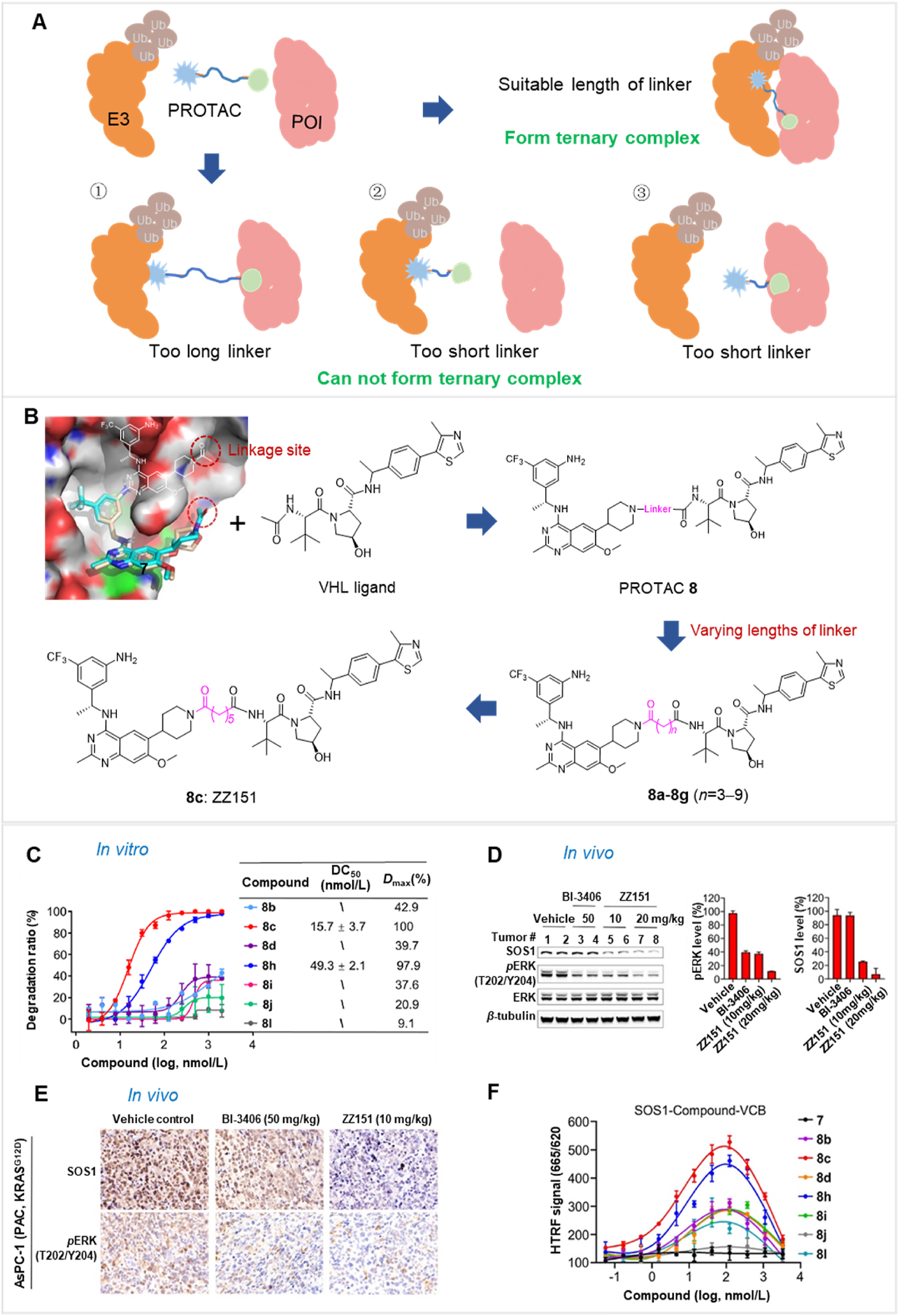
Linker chemistry can improve solubility and still hurt permeability, or improve permeability while creating solubility and formulation problems. That tradeoff is central in PROTAC medicinal chemistry because the scaffold is already large before linker optimization begins.
This is one reason PROTAC Builder is useful early: you can compare linker templates quickly, inspect the assembled scaffold, and decide which candidates are worth carrying into downstream modeling or chemistry.
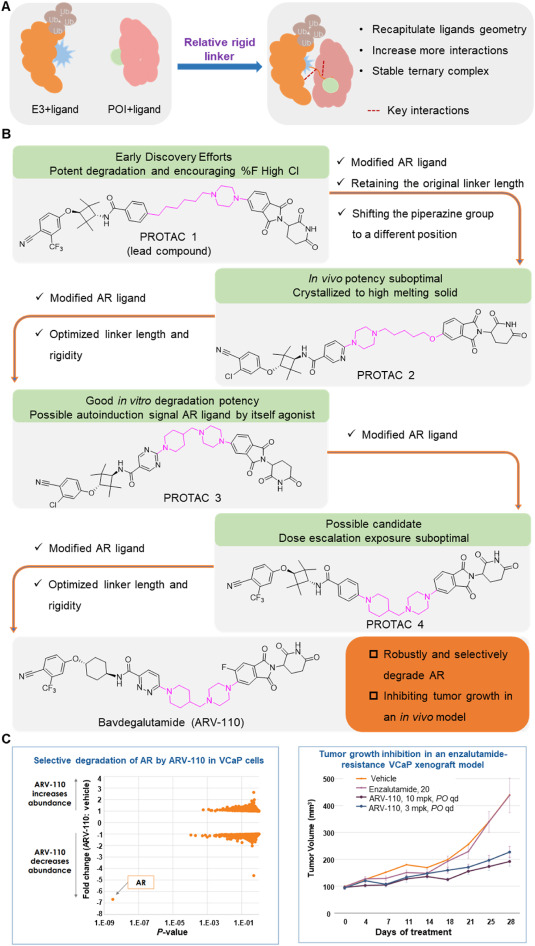
Flexible linkers can succeed because they let the system sample productive conformations. Rigid linkers can succeed because they reduce entropic cost and better preserve a productive ligand orientation.
Neither approach is universally better. The productive choice depends on the relative placement of the POI pocket, E3 pocket, and protein-protein interface that emerges in the ternary complex.
Useful when the interface needs conformational exploration to discover a productive pose.
Useful when preorganization or preserved vector geometry helps stabilize a favored ternary arrangement.
Linkers usually work best when they leave each ligand from a solvent-exposed region that does not disrupt key binding interactions. Moving the attachment atom can rotate the recruited E3, alter ternary protein-protein contacts, and change the degradation profile.
Assemble candidate degraders from selected warheads, linkers, and recruiters.
Open builderFollow the staged workflow for choosing anchors, attachment atoms, and linker hypotheses.
Read the guideSee where restrained ternary modeling, docking, MD, and interface scoring fit after assembly.
View toolsUse the science explainer if you want a quick refresher on warheads, linkers, and E3 recruitment.
Open explainerPrepare larger scripted or batch workflows once you know which linker ideas are worth scaling.
Open API BuilderThe review includes a large Table 1 covering linker classes, representative PROTACs, POIs, E3 ligases, and references.
Open Table 1 ↗Primary review used to ground this page: Dong et al., “Characteristic roadmap of linker governs the rational design of PROTACs,” Acta Pharmaceutica Sinica B, 2024.
Full article: ScienceDirect article and DOI: 10.1016/j.apsb.2024.04.007 .
Comprehensive linker summary table: View Table 1 .
Figures on this page are local copies derived from the review and are presented with visible attribution so readers can locate the original publication for full context.